Pope Damasus I
Bishop of Rome who established the biblical canon and backed Jerome's Vulgate.

Pope Damasus I (c. 305 – 11 December 384), also known as Damasus of Rome, was bishop of Rome from October 366 until his death in 384. He presided over the Council of Rome of 382, which established the canon, or official list, of sacred scripture. Damasus spoke out against major heresies including Apollinarianism and Macedonianism, thus solidifying the faith of the Catholic Church, and encouraged production of the Vulgate Bible with his support for Jerome. He helped reconcile relations between the Church of Rome and the Church of Antioch, and encouraged the veneration of martyrs.
- born
- c. 305, possibly Rome or Hispania
- died
- 11 December 384
- field
- Bishop of Rome (Pope)
- nationality
- Roman (possibly of Hispanic origin)
- known_for
- Presiding over the Council of Rome of 382, supporting Jerome's Vulgate, opposing
Lore & Background
Pope Damasus I was either born in Rome or in Hispania around 305, before moving to Rome at a young age with his parents. His parents were Antonius, who became a priest at the Church of St. Lawrence in Rome, and his wife Laurentia, both originally from Lusitania. Damasus began his ecclesiastical career as a deacon in his father's church, later serving as a priest. He was archdeacon of the Roman church when Pope Liberius was banished by Emperor Constantius II to Berea in 354. Damasus followed Liberius into exile, though he immediately returned to Rome. During the period before Liberius' return, Damasus had a great share in the government of the church. Following the death of Pope Liberius on 24 September 366, a violent succession crisis erupted. The deacons and laity supported Liberius' deacon Ursinus, while upper-class former partisans of Felix supported Damasus. The two were elected simultaneously. J. N. D. Kelly states that Damasus hired a gang of thugs that stormed the Julian Basilica, carrying out a three-day massacre of the Ursinians. Another ancient narrative, the 'Gesta', describes an armed force instigated by Damasus breaking into the Basilica of Julius and slaughtering those assembled. After gaining control of the Lateran basilica, Damasus was ordained as bishop. Damasus next sent a final assault against Ursinian supporters who had fled to the cemetery of Saint Agnes, slaying many. At a synod in 378, Ursinus was condemned and Damasus exonerated and declared the true pope. Damasus faced accusations of murder and adultery in his early years as pope, though the accuracy of these claims has come into question, with some suggesting the accusations were motivated by conflict with supporters of Arianism. He condemned Apollinarianism and Macedonianism in two Roman synods (368 and 369) and sent legates to the First Council of Constantinople in 381. He presided over the Council of Rome of 382, which determined the canon of Sacred Scripture. Damasus appointed Jerome of Stridon as his confidential secretary, and Jerome spent three years (382–385) in Rome in close intercourse with Damasus. Damasus encouraged Jerome to revise the Old Latin versions of the Bible into the Vulgate. Damasus also wrote Latin verse; Alan Cameron describes his epitaph for a young girl called Projecta as 'a tissue of tags and clichés shakily strung together and barely squeezed into the meter'. Several images of 'DAMAS' in gold glass cups probably depict him and appear to be the first surviving contemporary images of a pope, though there is no real attempt at a likeness.
Reader's Guide
Pope Damasus I is recognized as a saint by the Catholic Church, with his feast day on 11 December. His life coincided with the rise of Emperor Constantine I and the legitimization of Christianity, later adopted as the official religion of the Roman state in 380. The reign of Gratian, which coincided with Damasus' papacy, forms an important epoch in ecclesiastical history, since during that period (359–383), Catholic Christianity for the first time became dominant throughout the empire. Under the influence of Ambrose, Gratian refused to wear the insignia of the pontifex maximus, removed the Altar of Victory from the Senate at Rome, forbade legacies of real property to the Vestals, and abolished other privileges belonging to them and to the pontiffs. Damasus' key achievement was presiding over the Council of Rome of 382, which produced a complete list of the canonical books of both the Old Testament and the New Testament, identical with the list later given at the Council of Trent. According to the Oxford Dictionary of the Christian Church, this list is also known as the 'Gelasian Decree' because it was reproduced by Gelasius in 495. William Jurgens states that it is now almost universally accepted that parts of the Decree of Damasus are authentic parts of the Acts of the Council of Rome of 382 AD. Damasus also encouraged Jerome to produce the Vulgate Bible, which F.F. Bruce calls a key moment in fixing the biblical canon in the West. Damasus has been described as 'the first society Pope' and was possibly a member of a group of Hispanic Christians, largely related to each other, who were close to the Hispanic Theodosius I. It has been suggested that Damasus or another of the group commissioned and distributed gold glass cups bearing his image to friends or supporters, as part of a programme 'insistently inserting his episcopal presence in the Christian landscape'.
Did You Know?
- Damasus followed Pope Liberius into exile in 354, though he immediately returned to Rome.
- The election of Damasus in 366 involved a three-day massacre of Ursinians in the Julian Basilica, according to J. N. D. Kelly.
- Several gold glass cups bearing the image of 'DAMAS' are the first surviving contemporary images of a pope.
- Damasus' epitaph for a young girl called Projecta was described by Alan Cameron as 'a tissue of tags and clichés shakily strung together and barely squeezed into the meter'.
The Patristic Era and the Rise of Imperial Christianity
The intellectual and doctrinal architecture of Christianity was shaped over several centuries by a succession of theologians and writers whose collective work is known as the Patristic Era. This period stretches roughly from the late first century through the mid-eighth century, though it reached its greatest intensity during the fourth and fifth centuries. It was in this window that Christianity transitioned from a persecuted minority faith into the established state religion of the Roman Empire. The figures who drove this transformation did not work in isolation; they built upon one another's arguments, refined theological language, and codified beliefs that would define the faith for generations. Their collective output laid the groundwork for the institutional, liturgical, and doctrinal structures that would characterize both Western and Eastern Christianity for centuries to come. Understanding this era is essential for grasping the world in which fourth-century Roman bishops operated and the powerful theological currents that shaped their decisions and the contours of the Church they shepherded.
Doctrinal Authority and Sacred Tradition
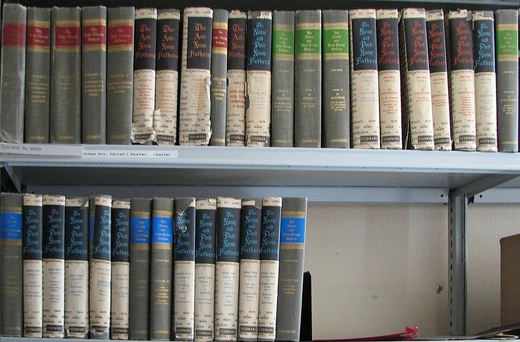
For numerous Christian denominations, the writings produced by these early theologians carry a weight that extends well beyond mere historical interest. In traditional dogmatic theology, the works of the Ante-Nicene, Nicene, and Post-Nicene Fathers are treated as part of Sacred Tradition, granting them an authoritative status in the establishment and articulation of doctrine. This means that their arguments on the nature of Christ, the Trinity, the sacraments, and the structure of the Church are not simply persuasive but are considered binding references for later theological discourse. The academic discipline of patristics has broadened the scope of who qualifies as a Father, and no single definitive list exists. Notably, some figures who made enormous contributions to the development of Christian thought, such as Origen and Tertullian, saw particular strands of their teaching subsequently rejected, illustrating that even within this authoritative tradition, the boundaries of acceptable doctrine were continually being negotiated, contested, and refined across generations of believers.
Apostolic Succession and the Early Church's Structure
The three most prominent among them—Clement of Rome, Ignatius of Antioch, and Polycarp of Smyrna—established patterns of ecclesial leadership that would persist for centuries. Ignatius, the third bishop of Antioch, addressed crucial questions of church governance, the sacraments, and the incarnation while en route to his martyrdom in Rome. Polycarp, a disciple of John, met his death as a martyr around 155 AD. Together, these figures anchored the concept of apostolic succession that would define the office of the Roman bishop and the broader hierarchical structure of the Church for centuries to follow.
The Greek Theological Tradition and Its Great Voices
The tradition of Christian thought written in Greek produced an extraordinary roster of influential figures whose ideas permeated the entire faith. Beyond the Apostolic Fathers, this stream includes Justin Martyr, the leading second-century voice on Logos theology who was ultimately martyred alongside some of his students; Irenaeus of Lyons, whose writings shaped early doctrinal development in Gaul; Clement of Alexandria; Origen; Athanasius of Alexandria; the Cappadocian Fathers—Basil of Caesarea, Gregory Nazianzus, and Gregory of Nyssa; John Chrysostom; Cyril of Alexandria; Maximus the Confessor; and John of Damascus. This Greek theological heritage provided the conceptual vocabulary and philosophical framework that fourth-century Roman bishops would have engaged with as they navigated the complex doctrinal disputes of their turbulent age.
Frequently Asked Questions
Who is Pope Damasus I?
Damasus I was the bishop of Rome who served from late 366 until his death in December 384. He is generally believed to have been born around 305, possibly in Rome or in the Iberian Peninsula. His tenure is remembered for shaping Latin biblical scholarship and navigating intense factional conflict within the Roman church.
What is the 'Damasine Canon' and is it a binding decree?
The so-called Damasine Canon is a list of biblical books that circulated in connection with the Council of Rome in 382, which Damasus presided over. Scholars debate whether the list was actually ratified at that council or attached later, so it is not universally treated as an official papal pronouncement. It remains a key witness to how the fourth-century West understood the boundaries of Scripture.
How did Pope Damasus I connect to Jerome and the Vulgate?
Damasus commissioned Jerome to produce a revised Latin translation of the Old Testament from the Hebrew, which became the foundation of the Vulgate. By giving Jerome institutional backing and a clear mandate, Damasus helped ensure the new translation would carry the weight of the Roman see. This patronage made the Vulgate the dominant Latin Bible for centuries.
What was the violent succession dispute surrounding Pope Damasus I?
When Damasus was elected in 366, a rival faction backed by the deacon Ursinus attempted to seize the Lateran basilica, leading to a deadly brawl in which Ursinus and several of his supporters were killed. The episode left deep scars on the Roman clergy and became a recurring flashpoint in later papal politics. Damasus himself was later accused of ordering the violence, a charge he denied.
Why does Pope Damasus I matter for students of patristics?
He sits at the intersection of several major fourth-century controversies, including his firm opposition to Apollinarianism and Macedonian (Pneumatomachian) theology. His promotion of martyr veneration and the cataloging of Roman martyrs shaped how the Western church remembered its early saints. For patristic scholars, his papacy is a touchstone for questions about canon formation, ecclesiastical authority, and the relationship between Roman and Greek theological traditions.
More in Early Church & Patristics 25-30
Elsewhere in the Early Church & Patristics universe
Spotted an error? Know more?
This is a living reference — every entry is fact-audited, and reader corrections feed straight into our audit queue. Suggest an edit · See this site's audit record