Pope Alexander I
Early bishop of Rome with disputed traditions and uncertain chronology.

Pope Alexander I (Greek: Αλέξανδρος, died c. 115) was the bishop of Rome from about 108/109 to 116/119, according to the 2012 Annuario Pontificio. Some believe he suffered martyrdom under the Roman emperor Trajan or Hadrian. His pontificate is marked by disputed traditions and uncertain chronology, but he is considered an early figure in the development of the Church of Rome's emerging liturgical and administrative traditions.
- born
- Unknown
- died
- c. 115 (or c. 118/119)
- field
- Bishop of Rome (Pope)
- nationality
- Unknown (Greek name)
- known_for
- Early development of Roman liturgy; disputed attributions of liturgical customs;
Verified Timeline
Lore & Background
According to the Liber Pontificalis, Alexander I inserted the narration of the Last Supper (the Qui pridie) into the liturgy of the Mass. However, the 1907 Catholic Encyclopedia, written by Thomas Shahan, judges this tradition to be inaccurate, a view shared by Roman Catholic and non-Roman Catholic experts alike. It is viewed as a product of the agenda of Liber Pontificalis—this section of the book was probably written in the late 5th century—to show an ancient pattern of the earliest bishops of Rome ruling the church by papal decree. The chronology of his pontificate is disputed, but he probably assumed office around 108/109 AD and died around 118/119 AD, after a tenure of 10 years. The introduction of the customs of using blessed water mixed with salt for the purification of Christian homes from evil influences, as well as that of mixing water with the sacramental wine, are attributed to Pope Alexander I. Some sources consider these attributions unlikely. It is certainly possible, however, that Alexander played an important part in the early development of the Church of Rome's emerging liturgical and administrative traditions. A later tradition holds that in the reign of the emperor Hadrian, Alexander I converted the Roman governor Hermes by miraculous means, together with his entire household of 1,500 people. Quirinus of Neuss, who was Alexander's supposed jailer, and Quirinus' daughter Balbina of Rome were also among his converts. Alexander is said to have seen a vision of the infant Jesus. His remains are said to have been transferred to Freising in Bavaria, Germany in AD 834.
Reader's Guide
Pope Alexander I's significance lies primarily in the contested traditions that surround his pontificate, which reflect later efforts to establish an ancient precedent for papal authority. The Liber Pontificalis attributes to him key liturgical innovations, such as the insertion of the Last Supper narrative into the Mass, but modern scholarship—both Catholic and non-Catholic—considers these attributions inaccurate, viewing them as products of a late 5th-century agenda. Similarly, the customs of blessed water mixed with salt and mixing water with sacramental wine are doubted by some experts. Despite these uncertainties, Alexander I likely contributed to the early development of Rome's liturgical and administrative traditions. Later legends, such as his conversion of the Roman governor Hermes and his entire household of 1,500 people, as well as his supposed vision of the infant Jesus, are not historically verifiable. His identification with a martyr named Alexander, commemorated together with Eventius and Theodulus on 3 May, was removed from the Roman calendar in 1960, as nothing is known of those three saints beyond their names, the fact that they were martyred, and that they were buried at the seventh milestone of the Via Nomentana on 3 May of some year. The Roman Martyrology lists them as Eventius, Alexander and Theodulus, the order in which their names are given in historical documents. Thus, Alexander I remains a shadowy figure whose legacy is more a reflection of later ecclesiastical politics than of reliable historical record.
Did You Know?
- The Liber Pontificalis claims Alexander I inserted the narration of the Last Supper (the Qui pridie) into the Mass, but the 1907 Catholic Encyclopedia judges this tradition inaccurate.
- A later tradition says Alexander I converted the Roman governor Hermes and his entire household of 1,500 people by miraculous means.
- Alexander I's remains are said to have been transferred to Freising in Bavaria, Germany in AD 834.
- The 1960 revision of the Roman calendar removed any suggestion that the martyr Alexander commemorated on 3 May was a pope.
- The Roman Martyrology lists the three martyrs of 3 May as Eventius, Alexander and Theodulus, in that order.
The Patristic Era as the Intellectual Bedrock of Christianity
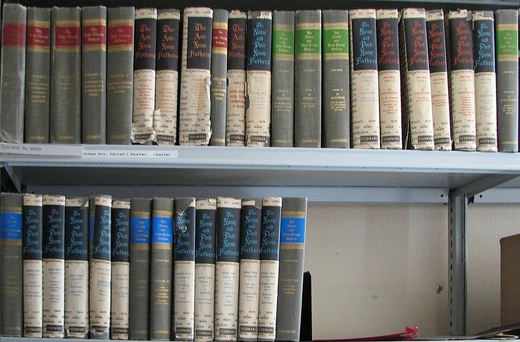
The span scholars designate the Patristic Era stretched from roughly the late first century through the mid-eighth century, though its most vigorous flowering arrived during the fourth and fifth centuries. That was precisely the window in which Christianity was shifting from a persecuted minority movement into the established state religion of the Roman Empire, and the theologians active in those decades laid down the doctrinal and intellectual architecture that would govern the faith for centuries afterward. Within traditional dogmatic theology, these authors carry a distinctive weight of authority that is considered essential to how doctrine is established and defended. The academic discipline of patristics has since broadened the scope of who qualifies as a Father, and no single definitive roster exists to settle the question once and for all.
The Apostolic Fathers and Their Living Link to the Twelve
Living in the first and second centuries, figures such as Clement of Rome, Ignatius of Antioch, and Polycarp of Smyrna are believed to have either known the apostles firsthand or been profoundly shaped by their teaching. Clement, a late first-century bishop of Rome, was described by Tertullian as having been ordained by Peter himself, while Irenaeus placed him as the fourth bishop of the city. Ignatius, the third bishop of Antioch, was said to have studied under the Apostle John, and the letters he composed while being escorted to his martyrdom in Rome addressed foundational subjects including the sacraments, the role of bishops, and the incarnation. Polycarp of Smyrna, also linked to John, met his death around 155 AD when the citizens of his city demanded his execution, and the account of his passing describes flames that failed to consume his body.
The Greek Fathers and the Circle of the Greats
Among the Greek Fathers, a select group achieved a stature that transcended their individual theological contributions. In Catholic tradition, four figures—Athanasius of Alexandria, Basil of Caesarea, Gregory of Nazianzus, and John Chrysostom—are elevated as the Great Church Fathers. Justin is venerated as a saint across Catholic, Oriental Orthodox, Eastern Orthodox, and Anglican traditions, underscoring the broad ecumenical respect these early thinkers command to this day.
Canon, Authority, and the Fragile Boundary of the Preserved Word
One of the most compelling tensions in patristic history is the question of which writings earned canonical standing and which fell outside it. It urged the community at Corinth toward harmony and order, and it was so widely copied and read in the early church that some communities listed it among the books of the New Testament. The writings of the Apostolic Fathers came from the same era and regions as texts that did make the final canon, and some were regarded with comparable esteem. Yet the full text of Papias of Hierapolis's work is now entirely lost, surviving only in fragments cited by later authors, a reminder that the boundary between what was preserved and what vanished remains partly uncertain.
Frequently Asked Questions
Who is Pope Alexander I?
Pope Alexander I was an early bishop of Rome whose name appears in the traditional papal succession between the apostolic era and the better-documented third-century figures. His Greek name (Αλέξανδρος) suggests a non-Italian origin, though his exact background remains unknown.
When did Pope Alexander I serve as bishop of Rome?
The 2012 Annuario Pontificio places his pontificate roughly between 108/109 and 116/119, with his death traditionally dated to c. 115 or possibly as late as c. 118–119. The wide range reflects the absence of any contemporary records from his lifetime.
What is Pope Alexander I known for?
He is primarily remembered as a figure in the early shaping of Roman liturgical and administrative customs, though many specific attributions to him are disputed by modern scholars. Later medieval legends also credit him with mass conversions and a martyrdom, none of which can be historically verified.
What do we know about Pope Alexander I's origins?
His birthplace, family, and date of birth are all unknown; the only concrete biographical detail is his Greek name, which points to a non-Roman background. This scarcity of information is typical for first- and early second-century Roman bishops.
Why is Pope Alexander I's historical record so uncertain?
No contemporary documents from his lifetime survive, so everything we know derives from later lists, hagiographies, and liturgical attributions composed centuries after his death. As a result, even the basic dates of his reign remain debated among patristic scholars.
More in Early Church & Patristics 25-30
Elsewhere in the Early Church & Patristics universe
Spotted an error? Know more?
This is a living reference — every entry is fact-audited, and reader corrections feed straight into our audit queue. Suggest an edit · See this site's audit record